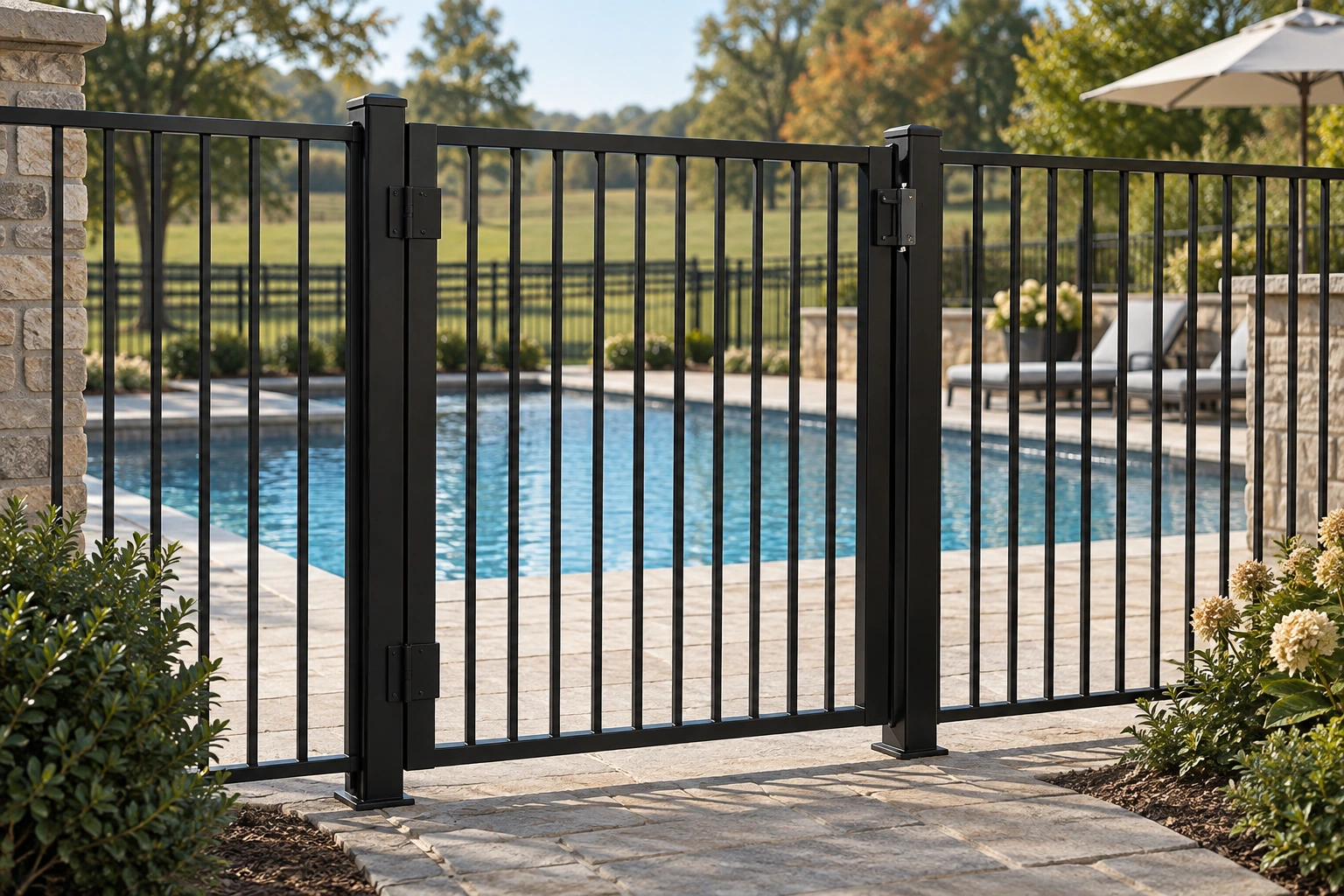
Pool Metal Gates in Lexington, KY | A self-closing, self-latching climb-resistant pool safety gate
We are Lexington KY Metal Gates, and pool Metal Gates in Lexington and the Bluegrass is a job we know by the soil as much as by the gate. Here is how we do it and what usually goes wrong when someone else does not take the ground seriously. We would rather explain the whole picture up front than have you discover the gaps after the concrete has already cured.
Pool Metal Gates in and around Lexington KY
Most of what separates a gate that still swings clean in ten years from one that is dragging on the concrete by year three comes down to two things: what is in the ground, and what the steel is made of. We take both seriously.
For the full picture of what we build, see everything under Lexington KY Metal Gates.
Everything We Build in the Bluegrass
Frost depth vs. real practice
Kentucky's Residential Code sets a 24-inch minimum frost protection depth for Fayette County under Table R403.1.4. A gate post is cantilevered, not backfilled on all sides like a foundation wall, so we typically go to 36 to 48 inches with a bell-shaped base.
Karst bedrock
Shallow limestone is common across the Inner Bluegrass. When we hit rock before we hit target depth, that changes the drilling equipment and the schedule, and we would rather tell you that on the estimate than discover it mid-dig.
Expansive clay
The clay above the limestone swells wet and shrinks dry. A footer without proper drainage gravel at the base can trap water against the concrete and accelerate that movement.
Material trade-offs
Wrought iron is heavier, more traditional, and needs periodic maintenance. Tube steel is strong and economical but needs galvanizing or powder coating to survive our humidity. Aluminum will not rust and suits automated residential gates where weight matters.
Usual vs. Us
How it's often done
- Post set in a hole roughly the depth of the concrete bag's instructions, backfilled with native clay
- Hardware sized to fit what is in stock, not to the gate's actual weight
- No allowance for Bluegrass clay movement or shallow limestone
How we do it
- Footer excavated to 36 to 48 inches with a bell-shaped base and drainage gravel
- Hardware specified from the gate's real weight and swing arc
- Site checked for shallow limestone before we quote, not after we hit it
What This Job Actually Involves
- Footer depth and diameter sized to the gate's actual leaf weight and swing arc, not a generic post hole
- High-PSI concrete with a bell-shaped base to resist frost heave and clay expansion
- Material selection matched to the setting: wrought iron, tube steel, or aluminum
- Hardware rated for the gate's real weight, not the hardware that happened to be on the truck
Specification Plate
- Materials
- Wrought iron, tube steel, or aluminum, matched to setting and budget
- Footer depth
- 36–48 inches, bell-shaped base, high-PSI concrete
- Finish
- Zinc-rich primer under a baked TGIC polyester powder coat
- Hardware
- Sealed ball-bearing or J-bolt adjustable hinges rated to gate weight
How We Build It, and How It Usually Gets Built
Kentucky's Residential Code sets a 24-inch minimum frost protection depth for Fayette County under Table R403.1.4. A gate post is cantilevered, not backfilled on all sides like a foundation wall, so we typically go to 36 to 48 inches with a bell-shaped base.
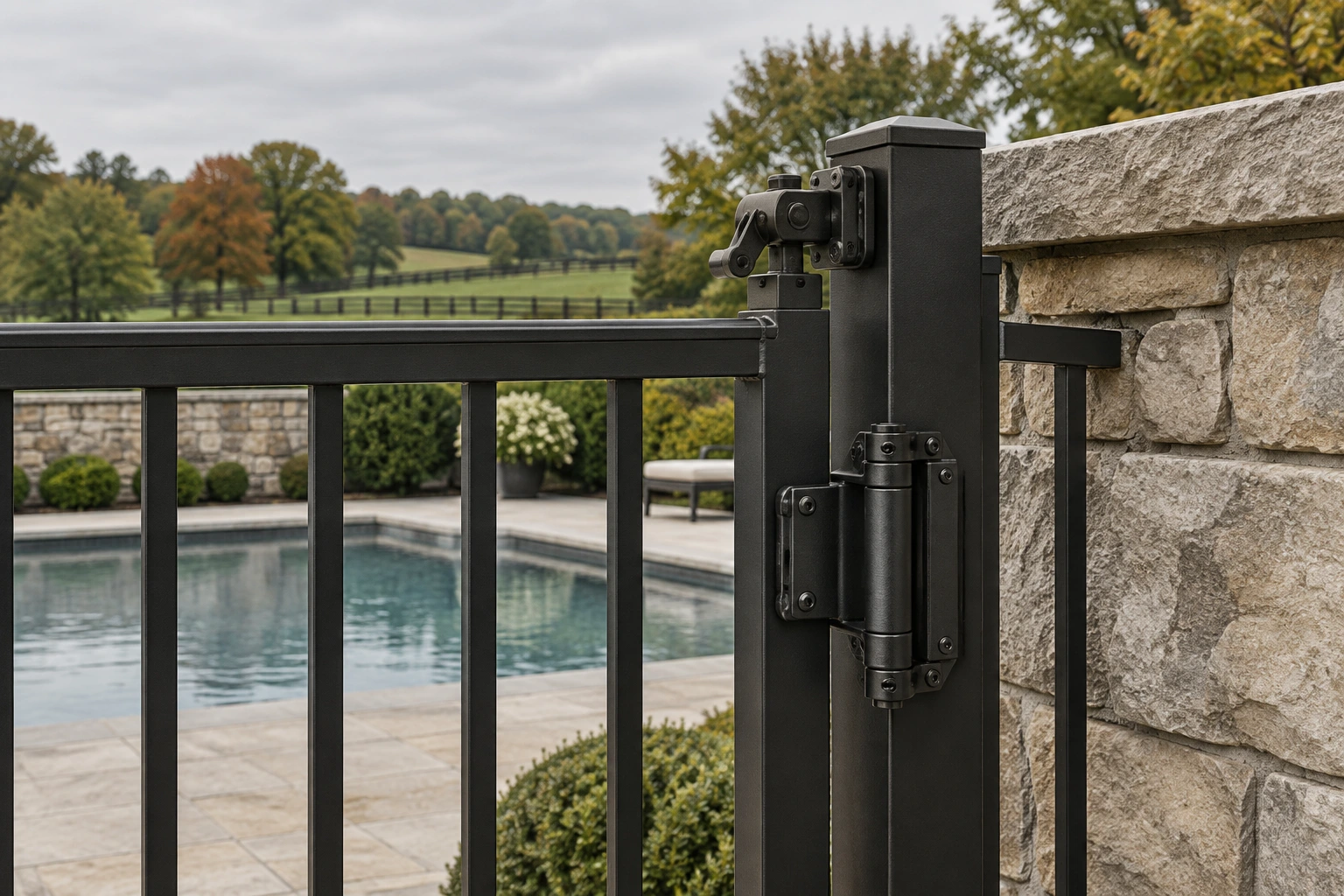
A cheaper hole dug to the code minimum will pass inspection in most cases. It may not hold a heavy swinging leaf through a decade of Bluegrass freeze-thaw cycles. We would rather explain the difference than let you find out later.
Our Four-Step Process
Site visit and measurement
We measure the opening, check grade and slope, and look for shallow limestone or drainage issues before quoting.
Footer excavation
We dig to 36 to 48 inches with a bell-shaped base, well past the code minimum.
Fabrication and installation
Gate and posts are fabricated or fitted to the opening and set plumb in high-PSI concrete.
Finish and safety check
Hardware is adjusted, the finish is inspected, and the gate is tested through a full range of motion.
Before We Arrive
- Mark or flag any known underground utilities near the post locations
- Confirm the exact swing or slide direction you want before we set posts
- Check your HOA or historic district guidelines if you have them
- Decide on manual or automated operation now, since it changes post spacing
What Drives the Cost
We do not publish flat prices because two gates that look alike on paper can be very different jobs once we are on site. These are the factors that actually move the number.
Gate size and material
A wider or heavier leaf needs a larger footer, heavier hardware, and in some cases a stronger operator, all of which affect the job.
Site conditions
Shallow limestone, an existing failed footer that has to be removed, or a slope at the entrance all add time that a flat, clear site would not need.
Automation and access technology
A manual gate is a different scope than a gate with an operator, sensors, a keypad, and an intercom wired together.
What Goes Wrong
| Symptom | Likely Cause | What We Do |
|---|---|---|
| Gate leans toward the drive after a year or two | Footer set at or above the code minimum, without accounting for the cantilever load of a swinging leaf | Excavate to full depth, rebuild with a bell-shaped high-PSI concrete footer and drainage gravel |
| Hinge side of the gate has visibly sunk | Post set in native clay backfill instead of engineered concrete, allowing seasonal heave | Reset the post in a properly sized footer rated for the gate's real weight |
| Gate scrapes the driveway in wet weather | Clay expansion lifting the post slightly during wet seasons | Adjust hinge geometry and confirm footer depth is adequate before treating it as a hinge problem |
Frequently Asked Questions
Cost depends on gate size, material, site conditions, and whether the gate is automated, so we do not quote a figure without seeing the opening. Call Lexington and the Bluegrass area jobs in for a free, no-obligation quote and we will walk you through what drives the number for your specific site.
A straightforward manual gate is often a one to two day job once the footer concrete has cured enough to bear load. Adding automation, access control, or unusual site conditions like shallow limestone extends that. We will give you a real schedule after the site visit, not a generic estimate.
You do not need to be present for the full job, but we do ask that someone is available at the start to confirm gate location, swing or slide direction, and any property lines or utilities we should know about.
Yes. We walk the site, look at what we are working with, and give you a written quote with no obligation and no pressure to sign that day.
Treating the footer like an afterthought. A gate post carries the full swinging weight of the leaf, and in 36 inch or shallower footers set in Bluegrass clay, that weight eventually wins. The steel above grade is rarely the part that fails first.
In most cases, yes. We can match an existing fence line, stone pillar style, or paint and finish, though very old or custom ironwork sometimes needs a fabricated match rather than an off-the-shelf part.
It depends on the jurisdiction and the height and location of the gate. Fayette County caps front yard fences and gates at 4 feet and side or rear yard structures at 8 feet, with different rules for gates on a public right-of-way. We check the applicable code for your address before we build so there are no surprises at inspection.
Adding a gate, especially an automated one with safety sensors, is generally viewed favorably by insurers, though you should confirm with your specific carrier since policies vary.
Yes, though concrete cure times run longer in cold weather and we plan the schedule around that rather than rushing a footer that has not properly set.
Talk to Us About Pool Metal Gates
Free, no-obligation quotes for pool metal gates across Lexington and the Bluegrass.
Call 859-800-6978